
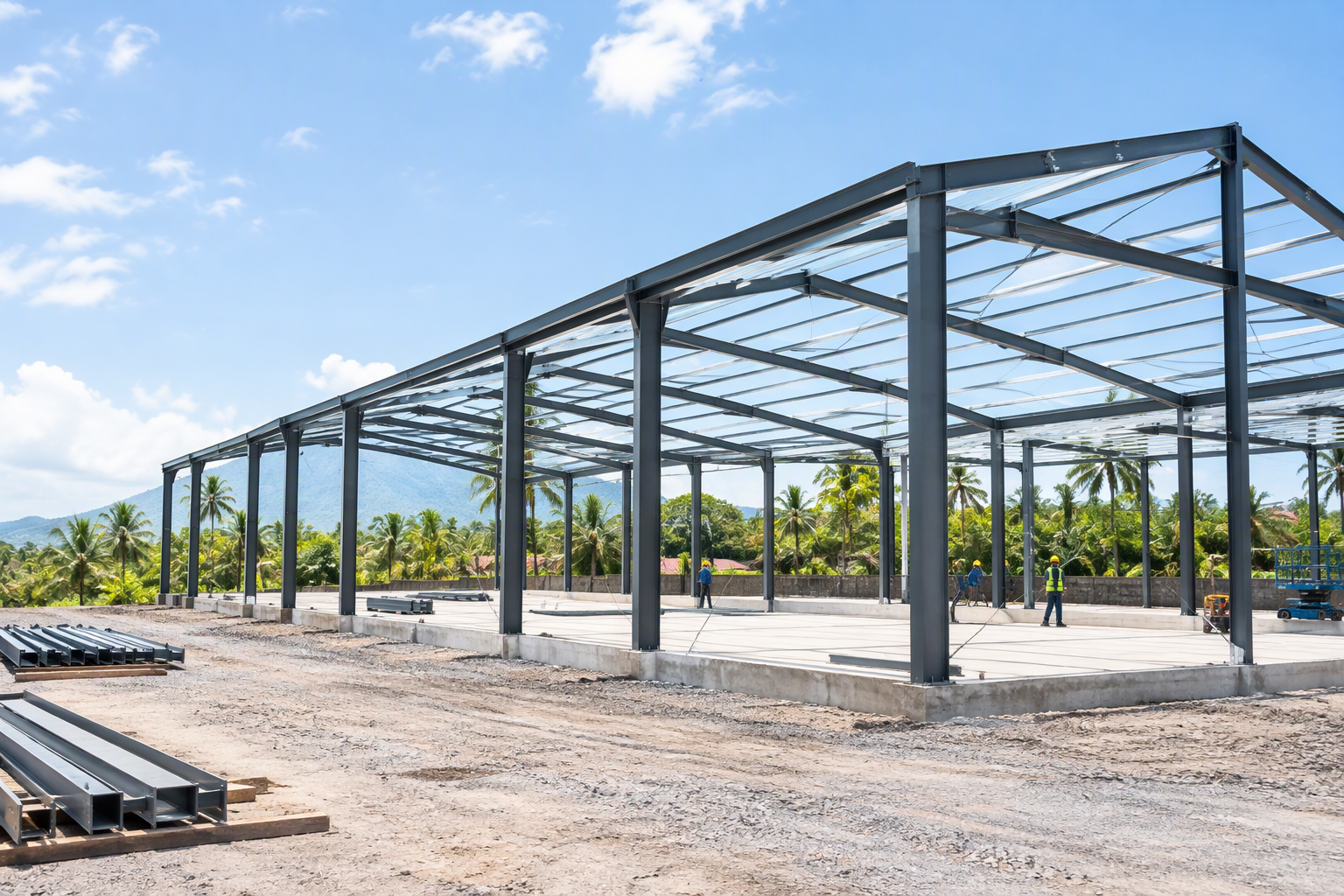
The estimated price and duration of steel construction in Bali cannot be determined only from the building area. Each project has different structure requirements, material specifications, land conditions, site access, and installation methods.
Warehouses, villas, hotels, workshops, restaurants, business buildings, and operational facilities may require different approaches. Therefore, a good estimate needs to be prepared based on sufficient project information, not just the number per square meter.
What affects the price of steel construction in Bali?
1. Types and functions of buildings
Buildings with wide spans, high workloads, space without multiple columns, or certain operational activities may require different structural specifications. The function of the building is one of the basis for determining the material requirements and implementation methods.
2. Profile Specifications and Material Quantity
Prices can be affected by the type of steel profile, thickness, volume or tonnage of materials, joint plates, bolts, and other supporting components. Comparison of offers should be made based on comparable specifications and volumes.
3. Design and level of complexity
Design with unusual shapes, long spans, elevation differences, special connections, or the need for integration with old buildings can require a more detailed planning and fabrication process.
4. Finishing and protection against corrosion
Tropical environments, humidity, rain, and locations close to the coast need to be considered when determining the protection of steel surfaces. Primers, protective paints, finishes, and treatment methods can affect the initial cost and maintenance needs.
5. Project Access and Location
Narrow roads, dense areas, limited storage space, delivery distance, or land conditions can affect the mobilization of materials and tools. Location surveys help avoid forecasts that are too far from real conditions.
6. Fabrication and erection needs
Fabrication offerings alone are certainly different from jobs that include delivery, tools, installation personnel, and erection on site. Make sure this scope is written clearly so that the comparison of bids is more fair.
Why can't the price be directly determined from the building area?
The area of the building only provides an initial picture. Two buildings of the same area can have different steel requirements because the span, height, load, roof shape, space function, location, and installation method are not the same.
To get a more useful estimate, prepare the size of the building, design drawings or floor plans, type of use, project location, finishing needs, and whether the work includes fabrication and installation.
Stages of steel construction
1. Consultation and data collection
Building needs, space function, size, location, drawings, and work targets are discussed as the basis for preparing the initial plan.
2. Survey and inspection of site conditions
If necessary, land conditions, vehicle access, unloading areas, storage space, and the need for assistive devices are checked so that the work method is more realistic.
3. Needs and Supply Planning
Specifications, material volume, scope of work, implementation assumptions, and cost estimates are prepared based on available data.
4. Procurement and Fabrication
Materials are prepared and components are worked on in the workshop according to the working drawings and the agreed needs.
5. Shipping and erection
Components are sent to the location by considering project access, then installed according to the work order and erection methods that have been planned.
6. Inspection and Settlement
After the structure is installed, inspection of the work and completion according to the scope of the project, including the discussion of surface protection or repair required.
How long does it take for steel construction in Bali?
The processing time cannot be beaten evenly for all projects. Duration is influenced by design readiness, structural complexity, number of materials, fabrication capacity, location access, weather, availability of tools, and erection methods.
In general, work is divided into several stages: consulting and surveying, planning, material procurement, fabrication, delivery, installation, and final inspection. These stages can run sequentially or partially, depending on the project readiness.
A more accurate schedule can be compiled after the project information and site conditions are reviewed. Therefore, ask for a schedule based on the stages of the work, not just one completion date without details.
information that needs to be prepared to request an estimate
- Project Location in Bali
- types and functions of buildings
- length, width, height, and span of the building
- Design drawings, floor plans, or sketches if available
- types of roofs and building load requirements
- Requirements for finishing and anti-rust protection
- Does the job include fabrication, delivery, and erection
- target time of work
Common questions about price and duration
Is there a definite price per square meter?
The price per square meter can only be an initial picture and does not always reflect the actual structure needs. Estimates are better compiled from specifications, material volume, scope of work, and location conditions.
Does the price include installation?
Not necessarily. Make sure the offer explains whether installation or erection, tools, delivery, finishing, and additional work are included.
Can small projects be consulted?
can be discussed based on the type of structure, location, specifications, and scope of work. Convey project information so that needs can be reviewed early.
When can the work schedule be determined?
Schedules can be compiled after project data, working drawings, material specifications, site access, and the scope of work are clear enough.
Consult steel construction estimates in Bali
If you are planning a warehouse, villa, hotel, workshop, restaurant, business building, or other facility, send the location and basic information of the project to start the discussion.
Also study Heavy Steel Construction Services in Bali to see the scope of work and service areas.


