
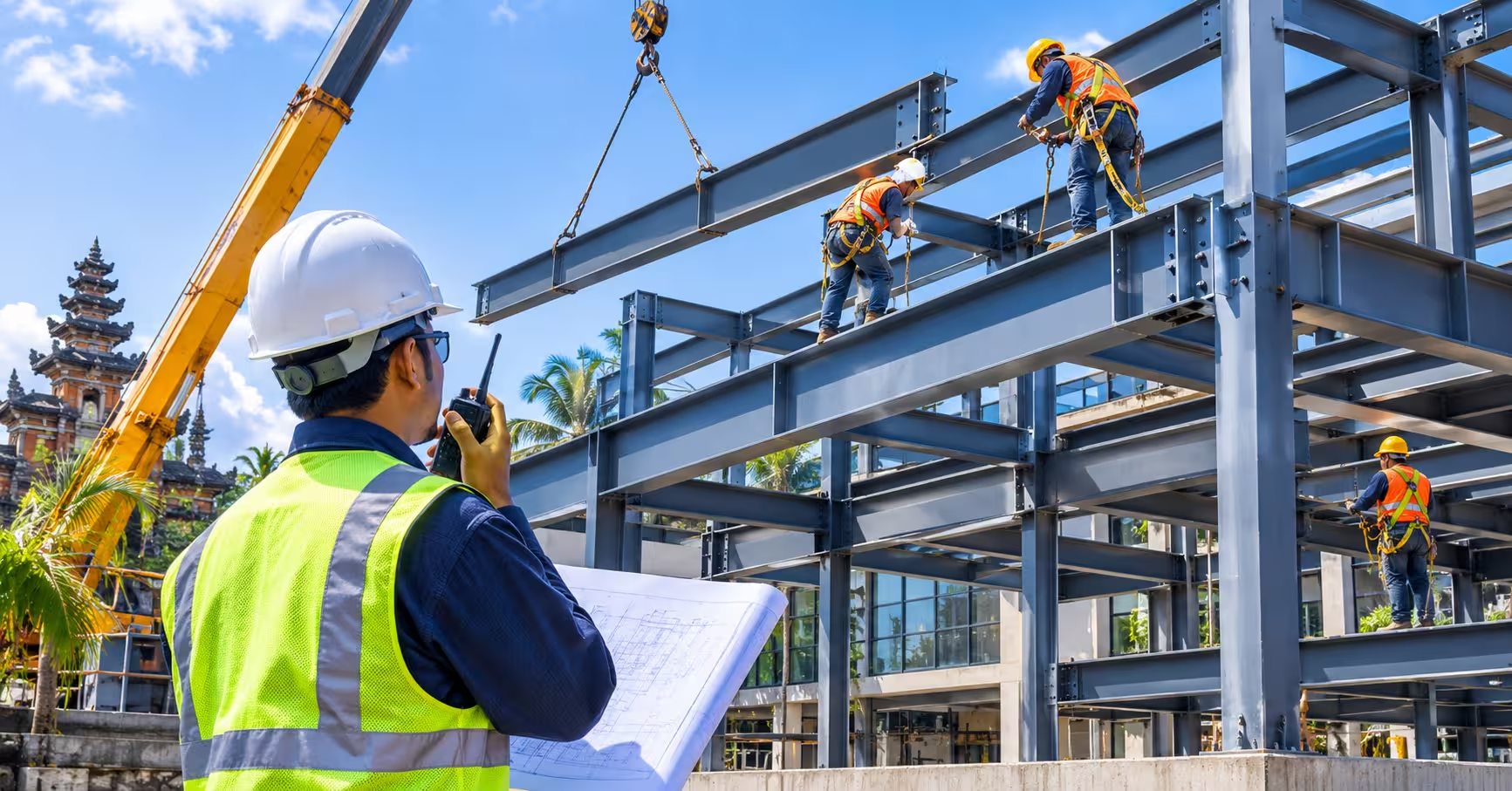
The construction of heavy steel structures in Bali requires a specific technical approach. Unlike typical inland regions, Bali’s geographical conditions—particularly in coastal areas, where high humidity and elevated salt content in the air are prevalent—demand rigorous standards for materials, structural calculations, and corrosion protection techniques.
For investors, villa owners, and developers planning the construction of warehouses, factories, or modern-style commercial properties, selecting the right heavy-steel construction contractor in Bali is the key factor in the success of a long-term investment.
This article provides an in-depth look at the crucial criteria for selecting a professional steel contractor—covering material standards, the importance of an experienced workforce, and the essential structural protection systems that must be implemented in Bali.
Why Is Heavy Steel Construction the Preferred Choice in Bali?
The development of modern architecture in Bali—ranging from co-working spaces and modern logistics warehouses to luxury villas with an industrial aesthetic—increasingly relies on heavy steel construction. Some of its key advantages include:
a. Speed of Execution
The fabrication process in the workshop can take place concurrently with foundation work on-site, significantly reducing construction time.
b. Spatial Flexibility
Steel structures allow for wide spans without the need for numerous supporting columns in the middle of a space.
c. Earthquake Resistance
The ductile characteristics of steel provide excellent structural flexibility for dissipating earthquake energy.
Important Criteria for Selecting a Steel Construction Contractor in Bali
Not all general contractors possess the specialization and certification required to handle high-risk heavy steel erection. Be sure to evaluate the following points before entering into a partnership:
1. Clear Field Experience and Portfolio
A professional contractor must be able to demonstrate a track record in steel structure projects—ranging from industrial warehouses and long-span roof trusses to multi-story structures. Ensure they possess a thorough understanding of erection methods utilizing cranes and heavy machinery, particularly for project sites in Bali, where access can sometimes be limited.
2. Transparency of Material Specifications and Standards
Ensure that your contractor uses high-quality structural steel profile materials with a clear origin. In professional construction practice, materials from reputable manufacturers—such as Gunung Garuda and Lautan Steel Indonesia—are the preferred choice, as they guarantee the required tensile strength and precise dimensional tolerances in accordance with industry standards.
3. Anti-Corrosion Coating Standards (Corrosion Protection)
This is the most critical factor in Bali. Sea air and tropical humidity can accelerate the corrosion process in structural steel. A competent contractor must apply a multi-layered coating system—combining an anti-rust primer, such as Zinc Chromate or an Epoxy Primer, with a protective finishing coat like Polyurethane, Synthetic Polybest, or an Epoxy topcoat—to ensure durability for decades to come.
Stages of Collaboration with a Professional Steel Contractor
To avoid budget overruns and project delays, ensure your contractor implements a transparent workflow:
1. Consultation and Initial Planning: Analysis of structural load requirements, spans, and building function.
2. Calculation of Estimation & Offer: Transparency of Material Volume, Connection Plate, and Labor Cost through Heavy Steel Construction Services in Bali.
3. Workshop Fabrication: Cutting, drilling, and welding of steel components under strict quality control supervision.
3. Workshop Fabrication: Cutting, drilling, and welding of steel components under strict quality control supervision.
Conclusion
Selecting a heavy steel construction contractor in Bali involves more than just seeking the lowest price; it requires ensuring that structural safety, precise material specifications, and environmental protection are all perfectly addressed. With careful planning and an experienced contractor as your partner, your property project will be robust, efficient, and hold high long-term investment value.
FAQ (Frequently Asked Questions)
1. How long does the fabrication and installation of a steel warehouse structure take?
The turnaround time varies depending on the volume and complexity of the design. Typically, the workshop fabrication process takes 3 to 6 weeks, followed by an on-site erection process lasting 2 to 4 weeks.
2. Is a steel structure suitable for villa buildings in Bali?
Highly suitable, particularly for modern industrial architectural designs, mezzanine structures, or long-span roofs that prioritize an open aesthetic and speed of construction.
3. How can rust be prevented on steel structures near the coast in Bali?
Prevention is achieved through a multi-layered protective coating system, using Zinc Chromate or an epoxy primer as a base, followed by a polyurethane or epoxy topcoat to provide resistance against extreme weather and sea salt.